Strength training for the 60 plus part 1 of 2
Daniel Paré, NCCP, CSO, CSPS, CSTS, Strength and conditioning coach. St. Thomas, Ontario, Canada.
Hello everyone, today we are going to talk about strength training for the 60 plus years of age. First of all it is never too late to get started. Some of us have been working out for years/decades and some of us are just getting started. This article is addressed to the ones getting started and will also be helpful and beneficial for the ones already working out.
Why strength training? Before I go into why you should be getting involved in a strength training program I need to explain to you what strength training really is. First and foremost the main focus is not to experience too much muscular soreness and I am sure that the majority of you would agree with that. The less muscular soreness the most likely you are to keep working out. The objective is to improve mobility, flexibility and strength. In order to improve on that one thing will need to be addressed.
I am strongly suggesting to you to slowly increase your water consumption. Why should you increase it? Very simply you will response much better if you are hydrated. I am not referring to coffee or any other drinks, but water only. You do not need to flood yourself, just need to slowly increase your water intake.
How to get started and what to do? Here I am not going to tell you to get up and go join a gym and ask a trainer to put you on a program, I am going to suggest to you to get up and get out of the house and go for a walk. In order to improve strength we need to start with mobility and flexibility. So, let’s go for a walk. The length of time or distance is totally up to you. The only thing that I am going to emphasize on is to use “common sense”.
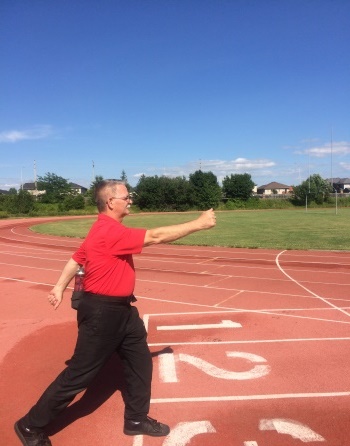
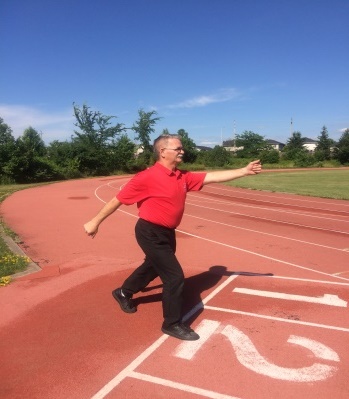
If you have not been physically active for a very long time (years) please be nice to yourself. Walk at your own pace and set yourself a logical objective.
Take your resting heart rate before you begin walking and after (or wrist or wind pipe as shown in the following photos).

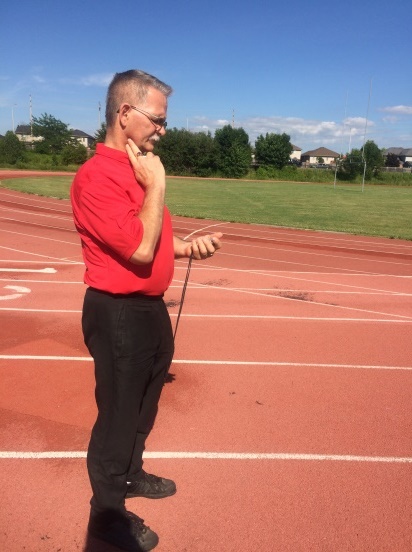
If you feel out of breath, then take a little break and start walking again. Pace yourself.
If you reside in the city you could go from one street to the next or around a city block (this all depends on you and your conditioning level). If there is a school near you then use the track and do a lap or laps. Most tracks are 400 metres per lap, so 4 laps equal 1 mile or pretty close to that.
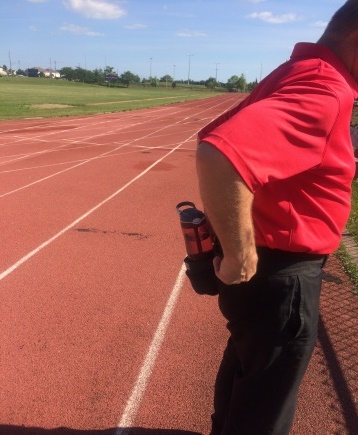
If you feel out of breath you are pushing too hard (you can also monitor your heart rate, take your pulse over the count 10 seconds and multiply that number by 6). You should have a water bottle with you while walking and drink water (just water). I also suggest you get yourself a water bottle holder (usually goes to your waist/belt).


Walking and holding a water bottle is not the same thing. When you walk you must be able to balance your arms. If you are holding a water bottle on one hand, guess what, that is added weight followed with a long lever (straight arm) and first thing you know you are out of balance and we all know what can happen! So when you want to drink you stop-sip-and go.

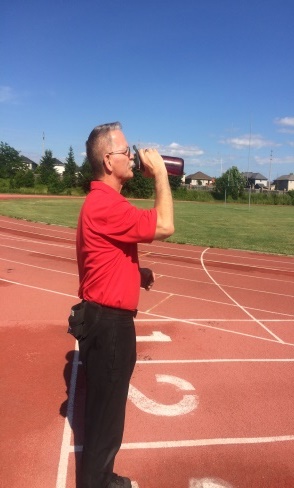
When you are done walking, do some stretches.
If you are outside at the track go toward the fence and sit on the ground, your back against the fence post.
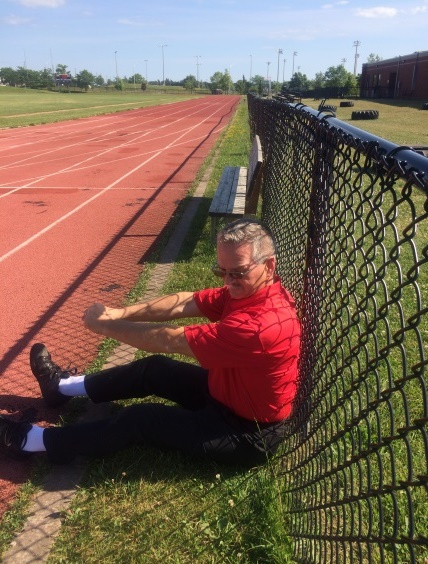
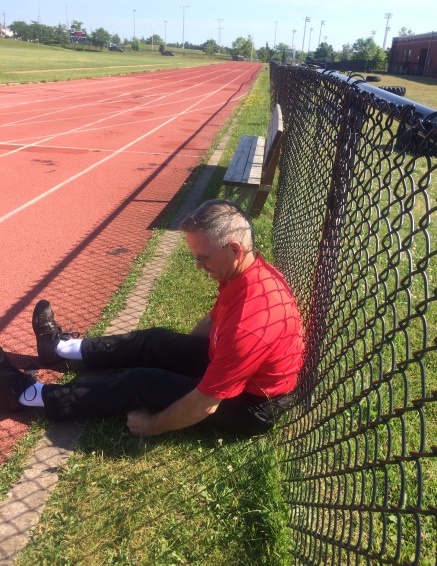

If you are on the street, I do not suggest you sit on the sidewalk, people might think there is something wrong with you… Try very hard to have your hips right against the post and your back against that post. Straighten your legs. Some of you will not be able to do that, so just go for a few reps like raise your knees up a little and take them back down again. The objective here is to have the back of your knees flat on the ground. You should not be able to slide your hand or fist under those knees at all. If you can, your hamstrings are tight and this means tight lower back. Now sit on the ground and bent your legs at 90 degrees, and lean on one side and then the other. Find something to sit on and bring your left ankle on to your right to your quad and hold it there for few seconds.


Then repeat with the other leg.

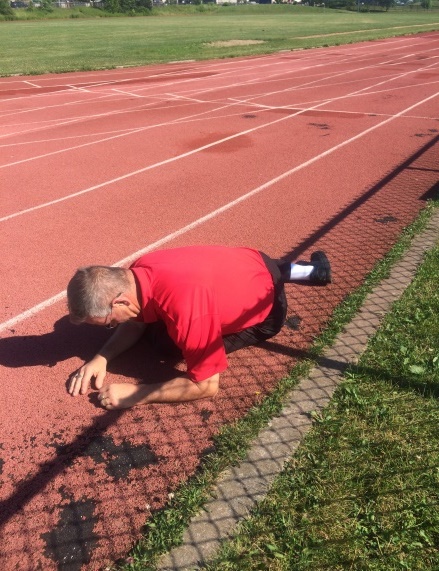
Then repeat with the other ankle.
When that one is done then stretch your quads. For the quads you may need to start with having your left or right foot on a bench behind you and as you get more flexible you will be able to hold that foot behind you.
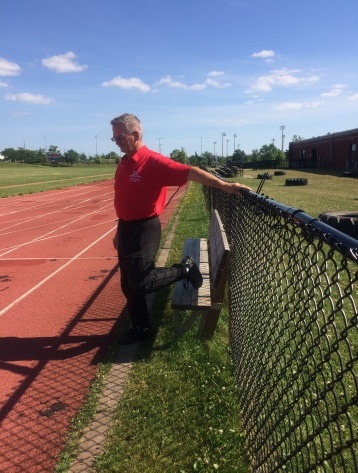

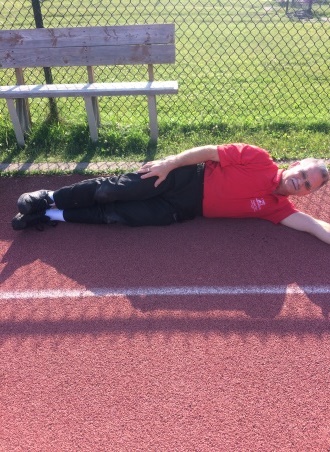
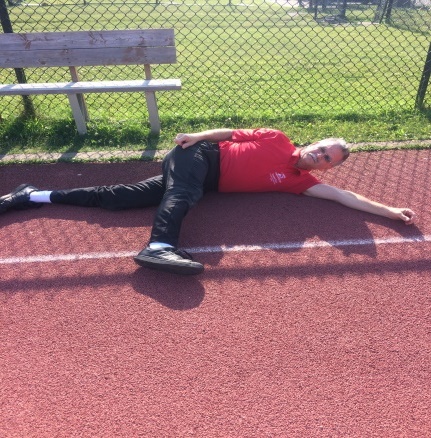
The next one is to lay on a flat surface, on your side and bring your right leg to the side and then bring it back to the starting position. Repeat with the left leg.

When walking you must control your breathing. Inhale with your nose and exhale with your mouth. This is going to sound weird but try your very best to walk military style (this will actually raise your heart rate more than regular walking .

More coming up
 Physically Fit Seniors