Strength training for the 60 plus, part 2 of 2
Hello everyone, today we are going to talk about strength training for the 60 plus years of age. First of all it is never too late to get started. Some of us have been working out for years/decades and some of us are just getting started. This article is addressed to the ones getting started and will also be helpful and beneficial for the ones already working out.
Why strength training? Before I go into why you should be getting involved in a strength training program I need to explain to you what strength training really is. First and foremost the main focus is not to experience too much muscular soreness and I am sure that the majority of you would agree with that. The less muscular soreness the most likely you are to keep working out. The objective is to improve mobility, flexibility and strength. In order to improve on that one thing will need to be addressed.
As for your strength training program goes, we are going to keep it simple and efficient. Less is best.
We are going to focus on four exercises all together, but not per workout. Each exercise targets several muscle groups;
- The deadlift barbell curl
- The power clean and press
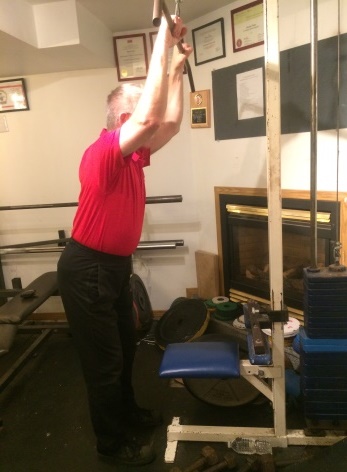
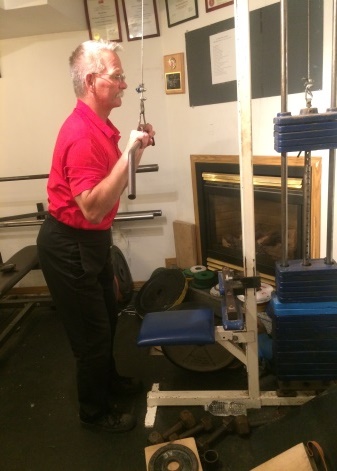
- The power triceps push down
- The squat
“You might say that this is not enough and I will reply that is all you need”
The deadlift barbell curl is performed with a barbell curl grip. You must get into a deadlift position first. If your flexibility does not permit you to get into this position then, we are going to have to improvise a little.
The barbell will need to be put on a bench so you do not have to start so low for now. You are going to modify the starting position so you can do the exercise. Do your very best to keep you back straight and shoulder retracted with straight arms then, you stand up and as you reach the stand- up position you right away do the barbell curl.
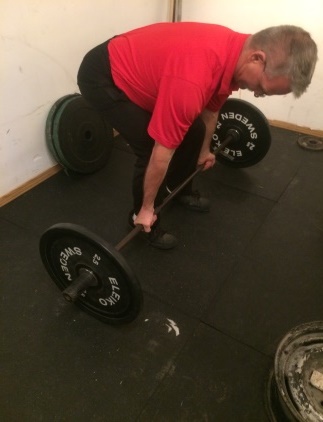


Here is how to modify: Remember that the objective is to move toward starting with the barbell on the floor.
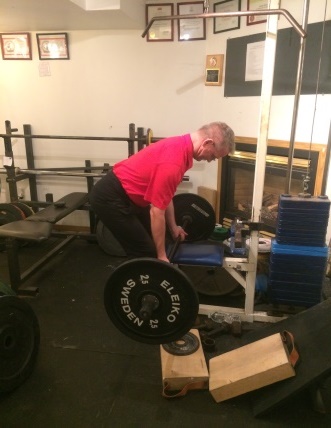
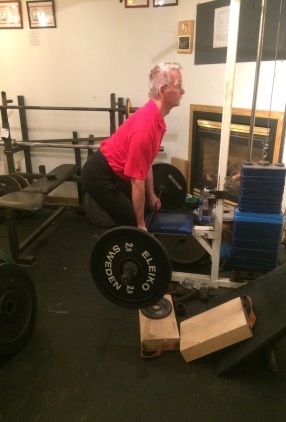


You are going to lower the barbell to came down to same way it came up, lower the barbell down until your arms are straight and then to the floor modified position or height. You may have the tendency to bring your hips forward when you are returning the barbell down, do not. The barbell did not slide on your thighs on the way up so it should not on the way down.
We are going to do 5 repetitions and then stop and have water. What would also help is if you could take your heart rate after the first set of 5 reps and before you begin the next set of 5 reps. This way you are not in a guessing game and you know when to start your next set.
The muscles involved are your legs, your back, your core musculature and your biceps. (If you have to drive to the track or the park you may end up bringing dumbbells with you, so here is how to do this exercise using dumbbells instead of a barbell.

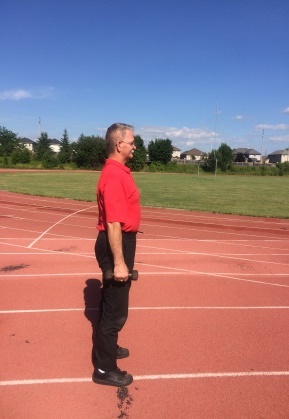
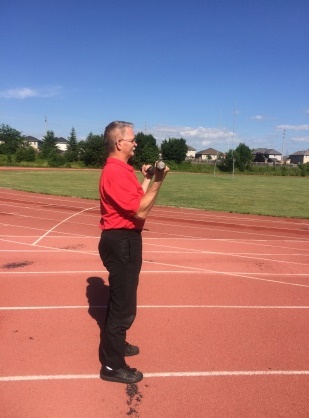
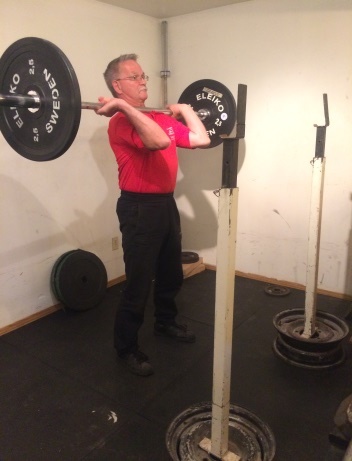
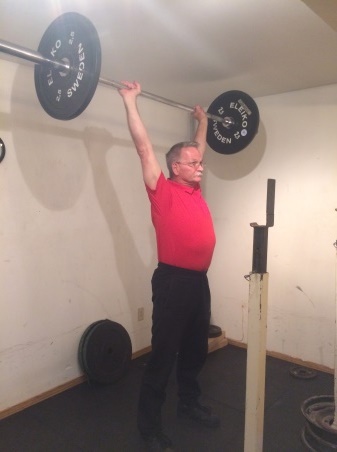
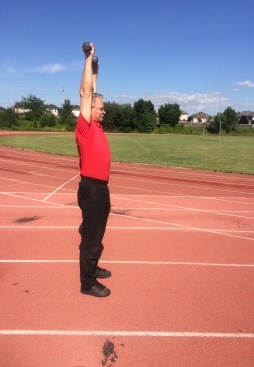
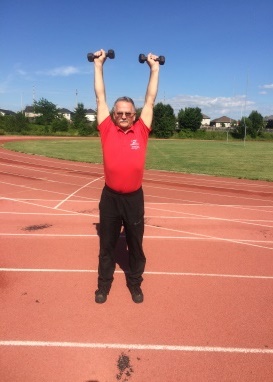
The power clean and press is performed as follow, in a deadlift position, using your legs and not your back, you bring the barbell to your clavicle (notice that I am shrugging the dumbbells and that I am standing on my toes at the same time just for a few seconds).
Take a few breaths and then press the barbell above your head. The muscles groups involved are your legs, your back, your core musculature, and your upper body musculature.


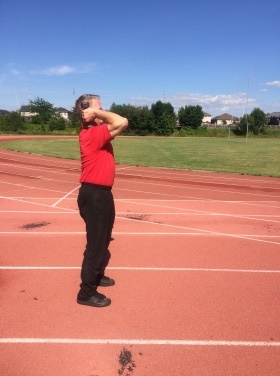
If you are at the track, here is how to perform this exercise with dumbbells.

The power triceps push down
Standing in front of the lat pull down unit, with a slight bent at the knees and hip, elbows at eye level and your hands on the bar, bring your elbows down to your sides and then your hands down until your hands touch your tights then return to the starting position. You are going to be working on your core musculature, back, and triceps.

The squat
Stand in front of the squat rack (this must be free weight, not a smith machine). Put your hands on the barbell slightly wider than shoulder width and your arms must be parallel with the floor. Position yourself under the barbell making sure that you are positioned right in the middle on it and that the bar rest on the upper back and not your neck.
Walk back with the barbell like one step is good enough and slowly begin your descent. Here you must lower your hips (no leaning forward), to a comfortable depth and then return to the starting position). If you do not feel comfortable with the barbell then go without it.
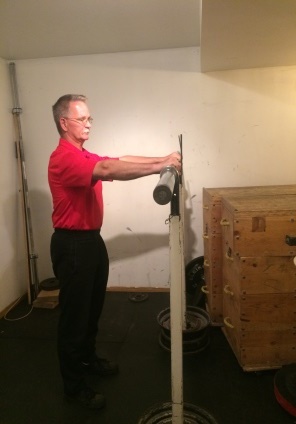
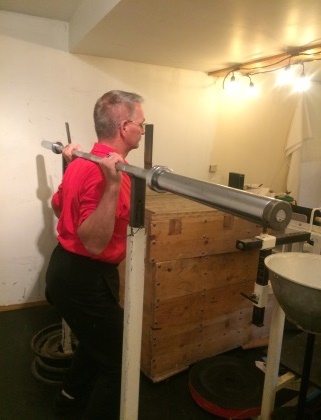
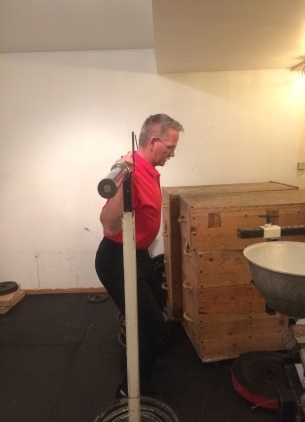
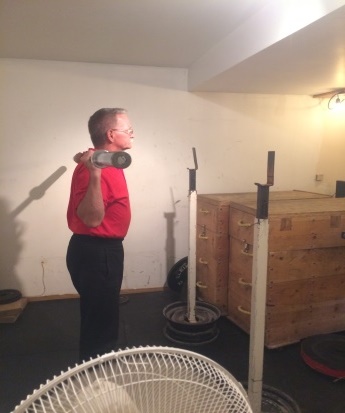


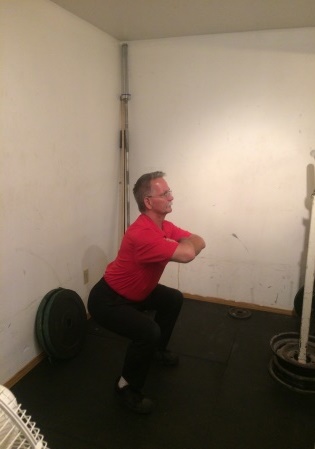
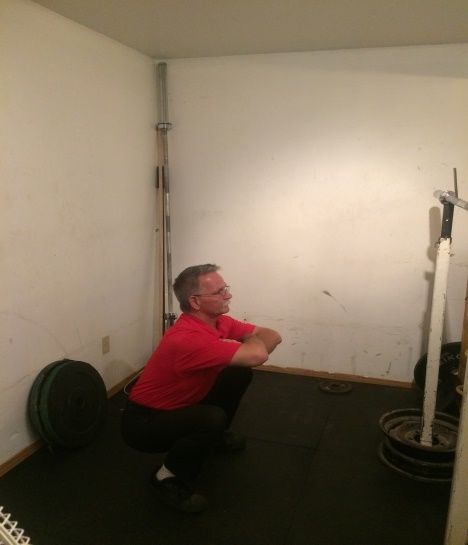
Danny O’Dells’ observation of this photo.
This a full depth squat…the ideal bottom position, if you are able to get this deep. But, it takes diligence to do it correctly.
Make note of the fact that you will rarely see a squat this low on a YouTube video by any of the so called trainers there. Most of their squats are not low enough to even sit on a toilet seat.
Forget about the 90 degree angle BS they always talk about, you go further down than 90 degrees sitting on a couch. Just go deep, no bouncing, with good form unless of course you have a valid medical or physiological condition that precludes going that far down. And this does not mean if you have had a TKA don’t go deep, unless your doctor told you not to. You have to get your Range of Motion back after TKA or you will continue having problems with your gait, ankles, hips, and back.
I have a TKA in both knees. Look at my depth.


If you do not feel comfortable squatting with a barbell then, go without it.

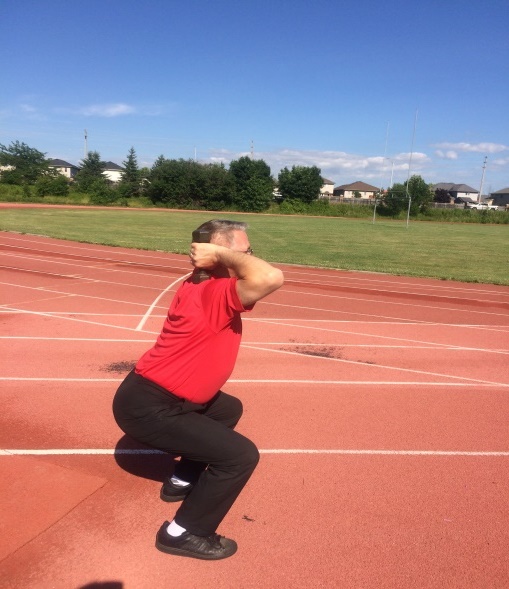
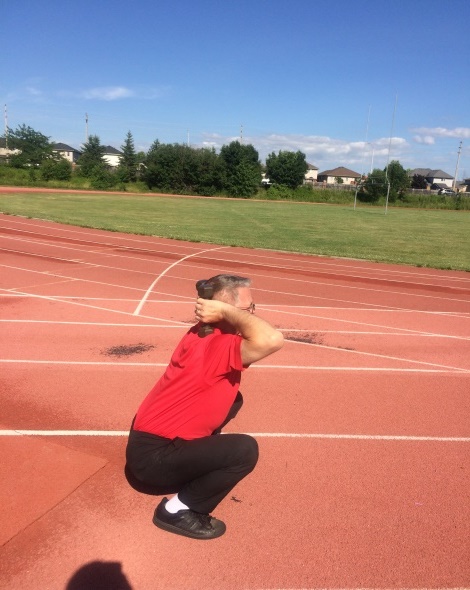
Here is how to perform the squat with dumbbells.


Please note: if you are new to exercising or if you were active years ago and you are now returning to physical activity, make sure you are very careful. Some of you will have to settle for the walking and some of the stretches, maybe only one of them. It will just be too much to add even one exercise. If you are getting up the following day and you feel very sore (muscular soreness) you have done too much.
As for drinking water, it must be water, not vitamin water, not sports drinks… just water. If you need to know how much water you should drink, here is a very easy- to-figure- out- formula; take your bodyweight in Kgs and multiply that number by .033. If I use myself here for example, I weigh 175 Lbs or 175 divided by 2.2 (1 Kg = 2.2 Lbs) = 79.54 or 75.5 x .033 = 2.38 or a little over 2 litres of water daily. Remember that this is the amount of water you should be drinking. If you are physically active or you are in a warmer climate and sweating a lot, this may and will not be enough.
Most of you are afraid of squatting. I was told by someone years ago that I could not understand the ones who could not squat because it came easy to me!
Squatting never came easy for me. I had a lot of difficulties doing them at the beginning, but I persevered and it became second nature. And yes, what I demonstrate here is done all the way down. That is how I squat and I have been squatting for years.
So, please, remember this simple fact, we are squatting all day long (we sit down and we get up constantly, at the kitchen table, watching T.V…), but as soon as we hear squat we panic! Don’t. It is the exact same thing. For starters just do not use any weight and sit on a bench and back up.
Do only 5 repetitions per set. The more repetitions you persist on doing, the faster your form begins to deteriorate (developing muscular imbalances). The objective is to remain strong from the first repetition to the last one. It does not matter if you have been training for years or just starting out, this remains the same. Videos of the exercises in this articles are going to be available really soon.
Hope you enjoy!
Sincerely
Daniel Paré, NCCP, CSO, CSPS, CSTS
Strength and conditioning coach
St. Thomas, Ontario, Canada.
 Physically Fit Seniors